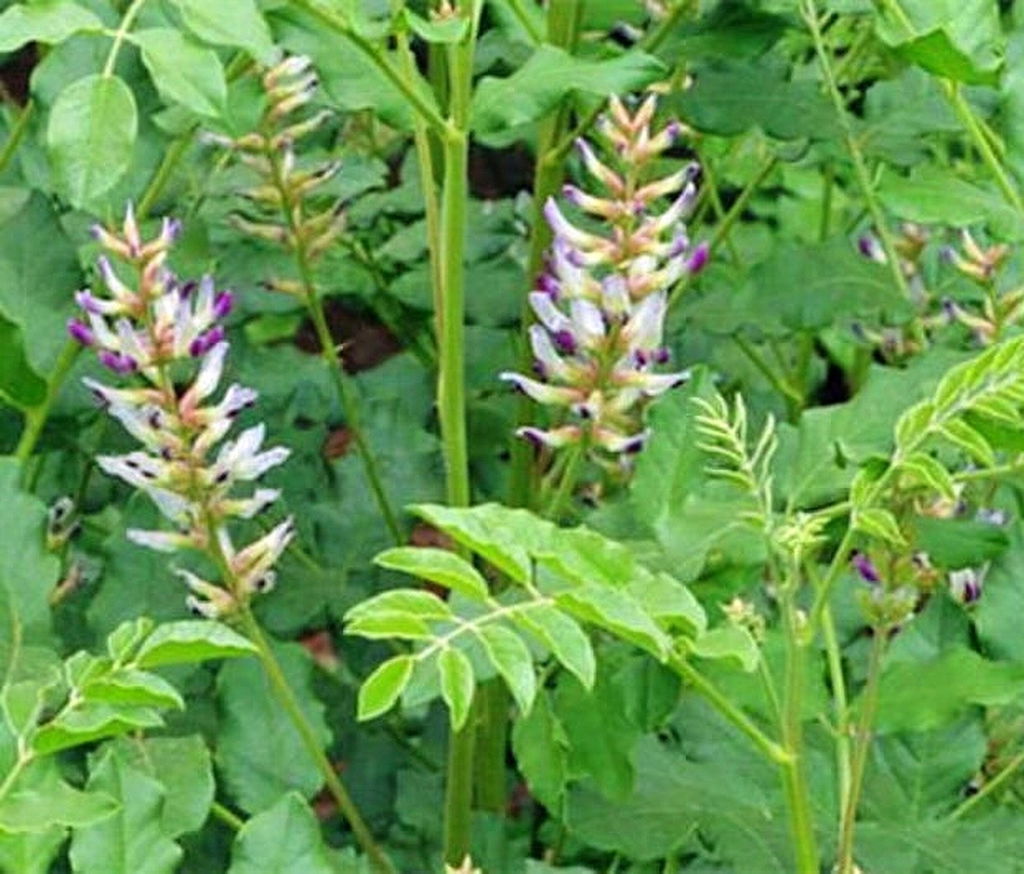
Wild Licorice, Heirloom Herb Seeds — The Native North American Licorice Root, 50x Sweeter Than Sugar, Traditional Food and Medicine
Wild Licorice (Glycyrrhiza lepidota) is the North American native cousin of the licorice used in candy and traditional medicine worldwide — a deep-rooted perennial in the pea family whose long, tough brown roots carry a sweet licorice flavor from approximately 6% glycyrrhizin content, making them 50 times sweeter than sugar. Native Americans used every part of this plant for generations: tender young spring shoots eaten raw, roots chewed as a natural teeth cleanser and flavoring, and slow-roasted root with a flavor remarkably similar to sweet potato. A powerful nitrogen-fixing companion plant that improves soil and supports beneficial insects as it grows. Slow to establish in year one; increasingly vigorous and productive from year two onward.
Why Grow Wild Licorice?
-
50x sweeter than sugar — natural glycyrrhizin content; no added sweeteners
-
Traditional Native American food and medicine — roots, young shoots, and leaves all used
-
Natural teeth cleanser — chew the fresh root as a traditional herbal tooth cleanser
-
Slow-roasted root tastes like sweet potato — a remarkable and unexpected culinary experience
-
Nitrogen-fixing companion plant — enriches soil and supports beneficial insects
-
Long-lived deep-rooted perennial — increasingly productive over time
-
Open-pollinated heirloom — save seed year after year
Culinary & Medicinal Uses
Harvest tender young shoots in spring and eat raw in salads — mild and sweet. Chew fresh root pieces as a natural breath freshener and teeth cleanser. Slow-roast whole roots like parsnips or sweet potatoes for a surprisingly sweet, caramelized flavor. Brew dried root as an herbal tea — naturally sweet without added sugar. Use as a natural licorice flavoring in baked goods, candies, and beverages. Traditionally used by many Native American nations as both food and herbal medicine.
Companion Planting
Wild Licorice is a nitrogen-fixing legume — its root nodules convert atmospheric nitrogen into plant-available form, enriching surrounding soil. Plant near heavy feeders like corn, brassicas, and tomatoes. Flowers attract and support beneficial insects including pollinators and predatory wasps that control garden pests.
Growing Notes
Seed pre-treatment required: Soak seeds in 180°F water and allow to soak overnight before planting — this softens the hard seed coat and dramatically improves germination. Direct sow ¼ inch deep in late fall or early spring in moist, sandy to loamy soil in full sun to part shade. To start indoors, sow in peat pots 6–8 weeks before last frost at 70°F; keep soil lightly moist. Transplant carefully — tap roots are fragile and do not like disturbance. Keep soil consistently moist as seedlings develop. Spreads slowly by rhizome over time — give it room to naturalize.
| Plant Type |
Hardy perennial, nitrogen-fixing legume |
| Days to Germination |
14–21 days (after hot water soak pre-treatment) |
| Plant Height |
16–40 inches |
| Root Harvest |
After 2–3 years of establishment |
| Sweetness |
~50x sweeter than sugar (glycyrrhizin) |
| Seed Pre-Treatment |
Soak in 180°F water overnight before sowing |
| Planting Depth |
¼ inch |
| Plant Spacing |
18–24 inches; spreads by rhizome |
| Soil |
Moist, sandy to loamy; well-draining |
| Light |
Full sun to part shade |
| USDA Zones |
4–11 (hardy perennial) |
| Latin Name |
Glycyrrhiza lepidota |
| Type |
Heirloom, Open-Pollinated, Non-GMO, Perennial |
Packed and shipped by Box Garden Seeds LLC — heirloom seeds grown without GMOs, selected for flavor, resilience, and your garden’s success.