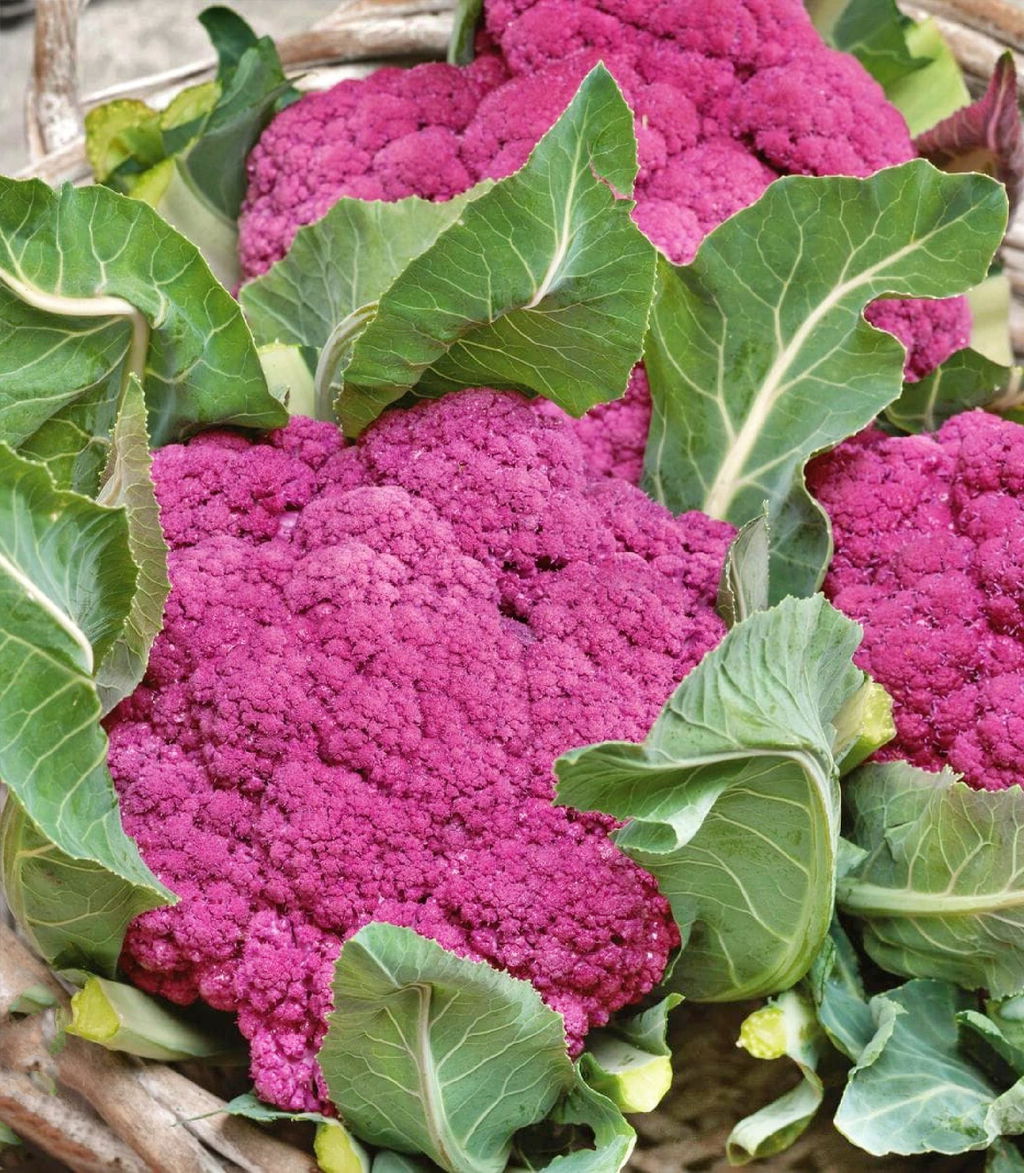
Violet Queen, Heirloom Cauliflower Seeds — Rich Violet-Purple Heads, No Blanching Required, Sweet & Mild, Anthocyanin-Rich | 85 Days
Violet Queen (Brassica oleracea var. botrytis) is a highly productive heirloom cauliflower prized for its striking violet-purple curds against dark green foliage. No blanching required — the purple develops naturally in full sun. Sweet and mild flavor; color fades to green when cooked. Perfect for containers, raised beds, or garden plots. 0.8g / 100+ seeds per packet. 85 days to maturity.
-
Botanical name: Brassica oleracea var. botrytis
-
Days to maturity: 85 days
-
Days to germination: 4–10 days
-
Head color: Rich violet-purple — fades to green when cooked
-
Flavor: Sweet and mild
-
Blanching: Not required — purple color develops naturally
-
Plant height: 12–18 inches; width 18–24 inches
-
Soil: Well-draining, fertile, nutrient-rich; pH 6.0–7.0
-
Temperature: 60–70°F growing; 65–75°F germination
-
Packet size: 0.8g / 100+ seeds
-
Sowing depth: ½ inch
-
Plant spacing: 18–24 inches; rows 24–30 inches
-
Light: Full sun
-
USDA Zones: 3–10
-
Type: Heirloom, open-pollinated, non-GMO, annual
-
Pests: Cabbage worms, aphids, flea beetles, clubroot
No Blanching, Anthocyanins & Color When Cooked
Unlike white cauliflower, Violet Queen needs no leaf-tying or shading — the purple develops naturally in full sun. That color comes from anthocyanins, the same antioxidant compounds found in blueberries and red cabbage, associated with anti-inflammatory and cardiovascular benefits. Anthocyanins are heat-sensitive, which is why the color fades to green when cooked — this is normal, not a defect. For maximum color and nutrition, serve raw. To slow the color shift when cooking, add a splash of vinegar or lemon juice to the water.
In the Kitchen
-
Raw crudités & salads: The standout use — rich purple florets are visually striking; sweet, mild flavor is excellent raw
-
Roasting: Toss with olive oil, garlic, and lemon; roast at 425°F — color fades but flavor deepens and caramelizes beautifully
-
Steaming: Light steam preserves more color than boiling; serve with brown butter or tahini
-
Stir-fry: Cut into florets and stir-fry with garlic and ginger
-
Color tip: Add vinegar or lemon juice to cooking water to slow the purple-to-green color shift
Growing Notes
Start indoors 4–6 weeks before last frost, or direct sow ½ inch deep after frost danger has passed. Transplant at 4–5 inches tall, spacing 18–24 inches apart in full sun. Keep soil consistently moist — inconsistent watering causes poorly formed heads. Cauliflower is a heavy feeder; work compost in before planting and fertilize regularly. No blanching required. Harvest at 85 days when curds are firm and tightly formed — heads can loosen or bolt quickly in warm weather. Use row covers against cabbage worms and flea beetles. Rotate brassicas on a 3–4 year cycle to minimize clubroot.
Frequently Asked Questions
Do I really not need to blanch Violet Queen?
Correct — the purple color develops naturally in full sun without any leaf-tying or shading. Simply grow in full sun and harvest when the head is firm and fully colored.
Why did my Violet Queen turn green when cooked?
Normal — anthocyanins are heat-sensitive and break down during cooking, revealing the underlying green chlorophyll. Flavor is unaffected. Serve raw or add acid to cooking water to preserve more color.
When should I harvest?
At around 85 days when the head is firm, tightly formed, and fully colored. Don’t wait — heads loosen or bolt quickly in warm weather. A slightly small firm head is better than an overripe loose one.
Packed and shipped by Box Garden Seeds LLC — heirloom seeds grown without GMOs, selected for flavor, resilience, and your garden’s success.