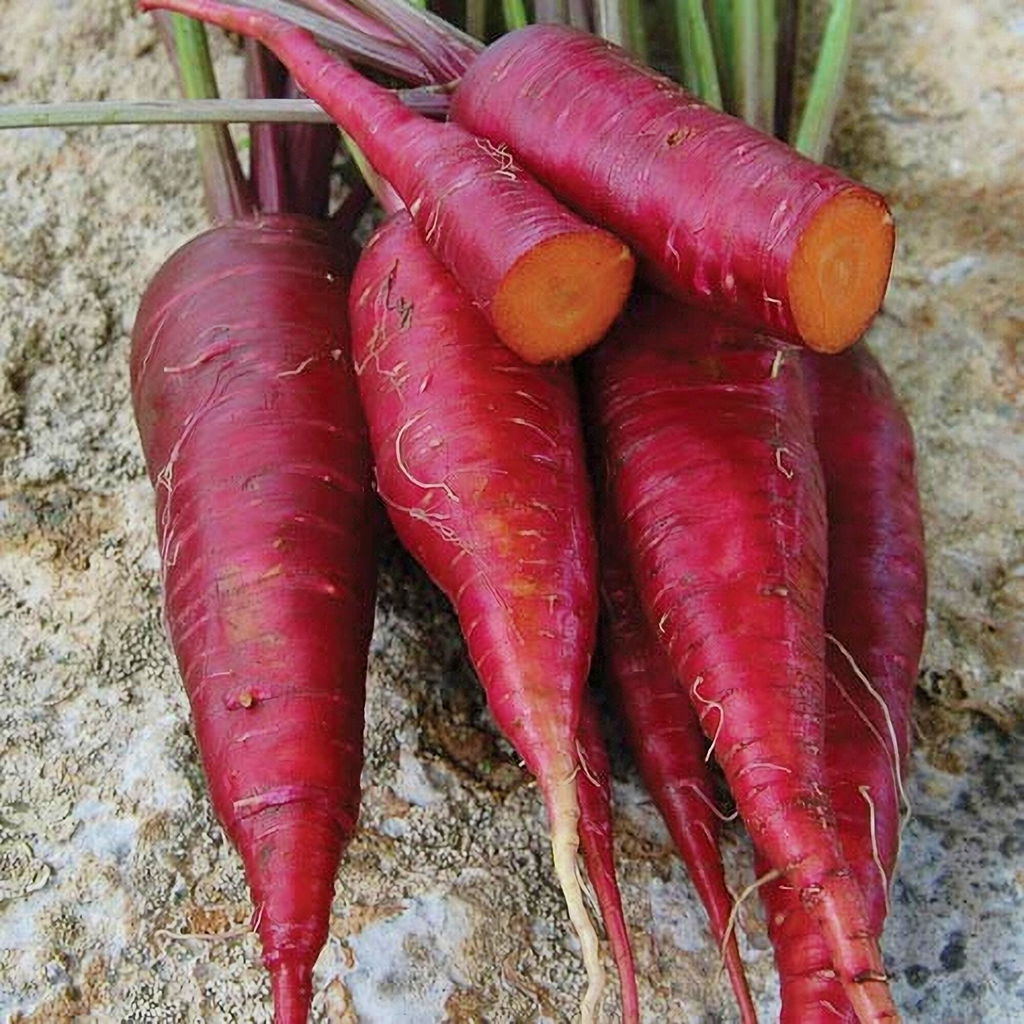
Purple Dragon Carrot Seeds — Heirloom | Reddish-Purple Skin, Brilliant Orange Interior, Spicy-Sweet Complex Flavor | 70 Days
Purple Dragon (Daucus carota) is a refined, unusually attractive heirloom carrot bred by Dr. John Navazio — one of the most respected plant breeders in the open-pollinated seed world. Gorgeous reddish-purple exterior is smooth and very attractive; the brilliant orange interior makes a stunning contrast when sliced on relish trays, platters, and salads. Half-long root habit (7–8 inches) means well-formed roots even in somewhat tight or heavy soil. Spicy-sweet and wonderfully complex flavor — great for snacking, and kids love them. High lycopene content makes Purple Dragon a super antioxidant carrot. Southwest adapted. Frost hardy. 1 g / 700+ seeds per packet. 70 days to maturity.
-
Botanical name: Daucus carota
-
Bred by: Dr. John Navazio
-
Days to maturity: 70 days
-
Days to germination: 12–18 days
-
Root size: 7–8 inches; half-long habit
-
Root color: Reddish-purple skin; brilliant orange interior
-
Flavor: Spicy-sweet, wonderfully complex
-
Lycopene content: High — super antioxidant
-
Soil tolerance: Half-long habit performs in tight or heavy soils
-
Frost hardy: Yes
-
Adaptation: Southwest adapted; USDA Zones 3–10
-
Packet size: 1g / 700+ seeds
-
Sowing depth: ⅛ inch
-
Spacing: Thin to 2–3 inches; rows 12 inches; 16 plants per sq ft
-
Soil pH: 6.0–7.0
-
Temperature: 50–75°F optimal
-
Light: Full sun (tolerates partial shade in heat)
-
Type: Heirloom, open-pollinated, non-GMO, biennial grown as annual
Bred by Dr. John Navazio
Purple Dragon was developed by Dr. John Navazio, a plant breeder and seed mentor with decades of work in open-pollinated vegetable breeding. Navazio’s breeding philosophy centers on flavor, nutrition, and adaptability — and Purple Dragon reflects all three. The variety was selected for its unusually refined appearance (smooth, glossy reddish-purple skin rather than the rough, matte surface of many purple carrots), its complex spicy-sweet flavor, and its half-long root habit that allows it to perform in heavier soils where most long-rooted purple varieties struggle. It is Southwest adapted, making it one of the few purple carrot varieties specifically selected for performance in arid and semi-arid growing conditions.
The Purple-Orange Cross-Section
Purple Dragon’s reddish-purple skin contains high concentrations of lycopene — the same antioxidant found in tomatoes — making it one of the most nutritionally dense carrot varieties available. The brilliant orange interior is rich in beta-carotene. Together they create a cross-section that is as nutritionally powerful as it is visually striking. Important note: the purple color is concentrated in the skin and fades with heat — use raw or lightly cooked to preserve the dramatic color contrast. The orange interior holds its color through cooking.
In the Kitchen
-
Relish trays & platters: The standout use — slice into coins to reveal the purple-and-orange cross-section; the color contrast is dramatic and the spicy-sweet flavor is excellent raw
-
Fresh snacking: Kids love them — the spicy-sweet complexity is approachable and the purple color is genuinely exciting
-
Soups & dishes: Great in soups, stews, and roasted vegetable dishes; the flavor complexity adds depth to cooked preparations
-
Roasting: Halve lengthwise and roast at 400°F with olive oil and honey; the purple fades but the flavor deepens and concentrates
-
Juicing: High lycopene and beta-carotene content makes Purple Dragon excellent for fresh juice; blend with apple and ginger
-
Rainbow slaws: Julienne with Lunar White, Solar Yellow, and Atomic Red for a four-color slaw
Growing Notes
Cool weather crop — sow in spring and fall. Direct sow ⅛ inch deep in loose, well-drained soil (pH 6.0–7.0) in full sun. Sow 1 inch apart in rows 12 inches apart; thin to 2–3 inches as true leaves establish. Keep soil consistently moist — carrot seed dries out easily when first planted; water gently and regularly until germination. Avoid nitrogen-rich fertilizers. Purple Dragon is frost hardy and tolerates partial shade in hotter climates. Half-long root habit means it performs in somewhat tight or heavy soils, though loose, well-drained soil produces the best roots.
Seed Saving
Purple Dragon is a biennial — it produces seeds in its second year. Select the tastiest roots for seed saving by tasting a small bite from the side or tip of the root at harvest. In warmer climates (desert Southwest), leave selected roots in the ground to overwinter and cover with straw. In colder climates (Rocky Mountains and similar), store roots in slightly moist sand in a root cellar or cool location and replant in spring. Carrots will flower and set seed in the second season. Isolate by caging or bagging — other carrot varieties including wild Queen Anne’s Lace will cross-pollinate. Collect seeds when fully dry and beginning to crumble. Store in a cool, dark, dry place.
Frequently Asked Questions
Does the purple color stay when cooked?
No — the purple color comes from lycopene and anthocyanins in the skin, which fade with heat. For the most dramatic purple-and-orange cross-section, use Purple Dragon raw or very lightly cooked. The orange interior holds its color through cooking regardless.
How does Purple Dragon perform in heavy soil?
Better than most purple carrot varieties. The half-long root habit (7–8 inches rather than 10–12 inches) means roots don’t need to penetrate as deeply, reducing the forking and stunting that affects longer-rooted varieties in heavy or rocky soil. For best results, still loosen soil to 8–10 inches and amend with compost before sowing.
Will Purple Dragon cross with my other carrots?
Yes — all Daucus carota varieties cross-pollinate, including wild Queen Anne’s Lace. For seed saving, isolate by caging or bagging individual plants and hand-pollinate. For eating purposes, cross-pollination has no effect on the current season’s roots.
Packed and shipped by Box Garden Seeds LLC — heirloom seeds grown without GMOs, selected for flavor, resilience, and your garden’s success.