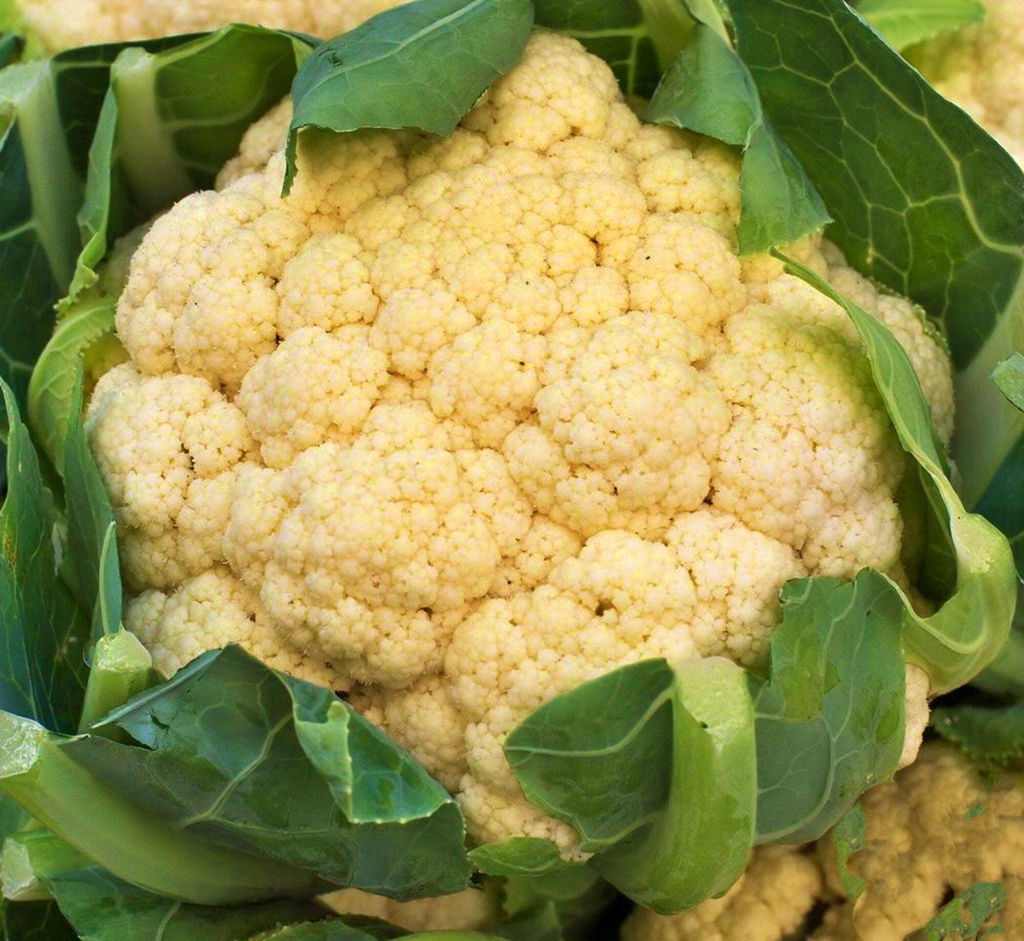
All Year Round Cauliflower, Heirloom Seeds — Large Tight White Heads, Year-Round in Many Zones, Overwinters | 65 Days
All Year Round (Brassica oleracea) is one of the most dependable and reliable cauliflower varieties available — a straightforward heirloom that lives up to its name. Planted in late summer, it can overwinter and be harvested in spring; planted in spring, it matures in 65 days. In many zones it can be grown year-round, making it the most versatile cauliflower for the cool-season garden. Produces large, tight, bright white heads with mild, sweet flavor. Seedlings handle frost; heads cannot — harvest when curds are tight and firm. 0.8g / 100+ seeds per packet. 65 days to maturity.
-
Botanical name: Brassica oleracea
-
Days to maturity: 65 days
-
Head: Large, tight, bright white; harvest when curds are tight
-
Flavor: Mild, sweet
-
Season: Year-round in many zones; overwinters when planted late summer
-
Frost notes: Seedlings handle frost; heads cannot — harvest before hard freeze
-
Soil: Moist, well-drained; pH 6.0–7.0
-
Temperature: 65–75°F optimal
-
Packet size: 0.8g / 100+ seeds
-
Sowing depth: ½ inch
-
Plant spacing: 18–24 inches
-
Light: Full sun
-
USDA Zones: 2–11
-
Type: Heirloom, open-pollinated, non-GMO, organic, annual/biennial
-
Pests: Aphids, cabbage loopers
Year-Round Growing — How It Works
All Year Round earns its name through genuine seasonal flexibility. Planted in late summer (July–August in most zones), seedlings establish before cold sets in, overwinter in the ground, and produce heads in early spring — filling the hungry gap when little else is ready. Planted in early spring, it matures in 65 days for a late spring/early summer harvest. In mild climates (Zones 8–11), it can be grown through winter for a continuous supply. In colder zones (2–7), succession planting in spring and late summer covers both the early summer and spring harvest windows. Seedlings are frost-hardy; protect developing heads from hard freezes by tying outer leaves over the curd.
Blanching for White Heads
Cauliflower heads turn yellow or develop off-color when exposed to direct sunlight. To maintain the bright white color All Year Round is known for, blanch the heads as they develop: when the curd reaches 2–3 inches across, gather the outer leaves and tie them loosely over the head with twine or a rubber band. Check every few days and harvest when the head is firm, tight, and fully formed. In cool, overcast climates, blanching may not be necessary — the leaves naturally fold over the developing head.
Companion Planting
All Year Round benefits from strategic companion planting. Rosemary, thyme, sage, onions, and garlic planted nearby help deter common brassica pests through their strong scents. Celery is particularly effective at repelling white cabbage fly. Beetroot and chard make good neighbors. Avoid planting near other brassicas in the same bed to reduce disease pressure and pest concentration — rotate brassica crops on a 3–4 year cycle.
Nutrition
Cauliflower is part of the brassica family — one of the most nutritionally dense vegetable groups. A single serving provides the full recommended daily amount of Vitamin C, essential for immune function. Cauliflower is also a good source of Vitamin K, which aids in blood clotting and bone health, as well as folate, fiber, and choline. All Year Round’s large, dense heads maximize yield per plant, making it one of the most nutritionally efficient crops in the cool-season garden.
In the Kitchen
-
Roasting: The standout use — cut into florets or steaks, toss with olive oil and any spice blend, roast at 425°F until caramelized; the mild flavor takes on whatever seasoning you give it
-
Cauliflower rice: Pulse florets in a food processor to rice-sized pieces; sauté with oil and seasoning as a low-carb rice substitute
-
Mashed cauliflower: Boil until tender, drain well, and mash with butter and cream as a potato substitute
-
Giardiniera: Pickle florets in vinegar brine with peppers, celery, and carrots for cauliflower giardiniera
-
Crudités: Raw florets with dip — the mild, sweet flavor is excellent fresh
-
Soups: Roast then blend for a rich, creamy cauliflower soup; or add florets to minestrone and vegetable soups
Growing Notes
Start indoors 4–6 weeks before last frost for spring crops, or direct sow ½ inch deep outdoors. Space plants 18–24 inches apart in full sun in moist, well-drained soil (pH 6.0–7.0). Keep soil consistently moist and fertile — cauliflower is a heavy feeder. Optimal temperature 65–75°F. Blanch heads when curds reach 2–3 inches. Harvest when heads are firm, tight, and fully formed — before curds begin to separate or yellow. Watch for aphids and cabbage loopers; use row covers as a preventive measure.
Frequently Asked Questions
Can I direct sow All Year Round or does it need to be started indoors?
Both work. Direct sow ½ inch deep outdoors after last frost for spring crops, or in midsummer for fall/winter crops. For earlier spring harvests, start indoors 4–6 weeks before last frost and transplant when seedlings are 4–6 inches tall. Direct sowing is simpler; indoor starting gives you a head start in short-season climates.
My cauliflower head is turning yellow — what happened?
Yellow color develops when the curd is exposed to direct sunlight. Blanch the head by tying outer leaves over the developing curd when it reaches 2–3 inches across. If the head has already yellowed, it is still edible — the flavor is unaffected — but the color will not return to white.
When exactly should I harvest?
Harvest when the head is firm, tight, and fully formed and the curds are still compact — before they begin to separate, loosen, or develop a grainy texture. A head that has gone past peak will have curds that are beginning to pull apart and may show yellowing or browning. When in doubt, harvest early — a slightly small head is better than an overripe one.
Packed and shipped by Box Garden Seeds LLC — heirloom seeds grown without GMOs, selected for flavor, resilience, and your garden’s success.